Old-Fashioned Canadian War Cake Recipe | Easy Wartime Raisin Cake
By Rebecca St.Clair
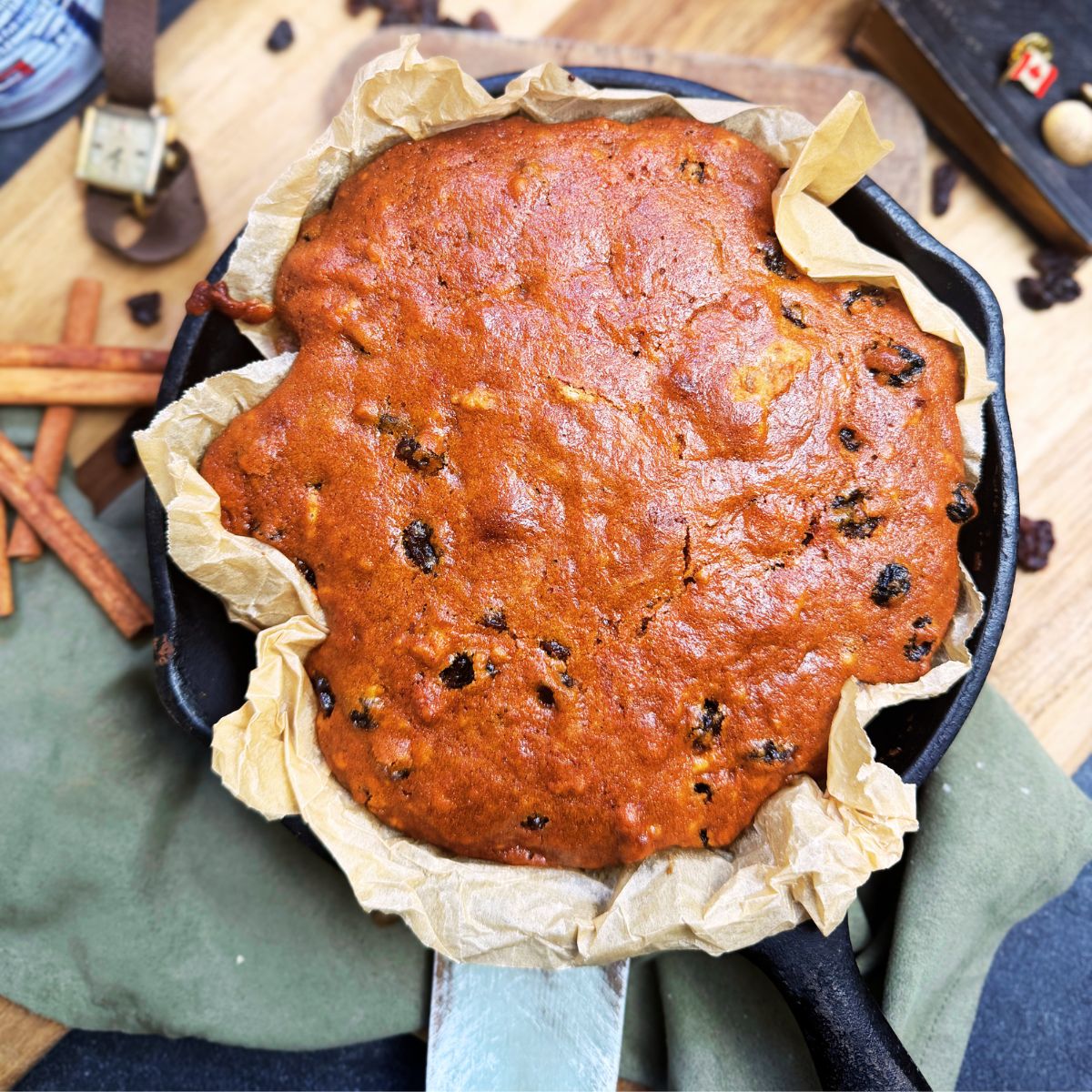
If you love old-fashioned recipes made with simple ingredients, this Canadian War Cake recipe is great way to taste your way through history.
Also known as War Cake, Boiled Raisin Cake, Eggless Cake, or Depression Cake, this humble raisin cake was made by Canadian home cooks during times when ingredients such as eggs, butter, and milk were expensive, hard to find, or being rationed. Instead of relying on a long list of rich ingredients, the recipe uses pantry staples, raisins, warm spices, and a simple boiled mixture to create a wonderfully fragrant, chewy cake that you could make when times where tough but you still wanted a little sweet treat.
This recipe is definitely not like those fluffy icing topped sugar filled cakes that we’re used to seeing now, but it is a great way to bring history to life. It’s the kind of recipe that reminds us that good baking doesn’t always require fancy ingredients. Sometimes a handful of raisins, a little flour, and a few pantry staples are all you need to make something delicious.
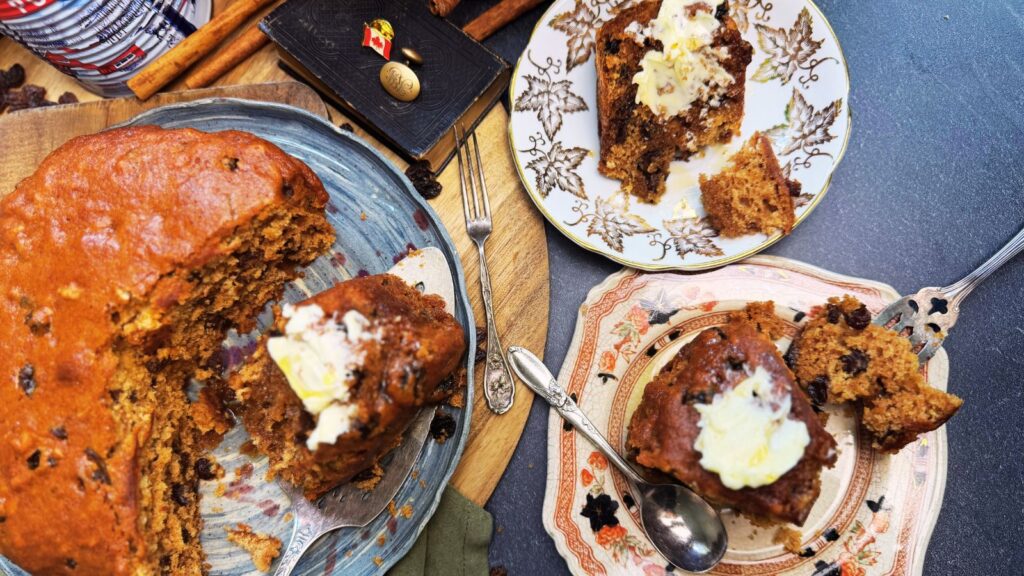
What Is Canadian War Cake?
Canadian War Cake is an old-fashioned eggless, milkless, and butterless raisin cake linked with wartime cooking in Canada. As well as other countries with similar wartime cakes.
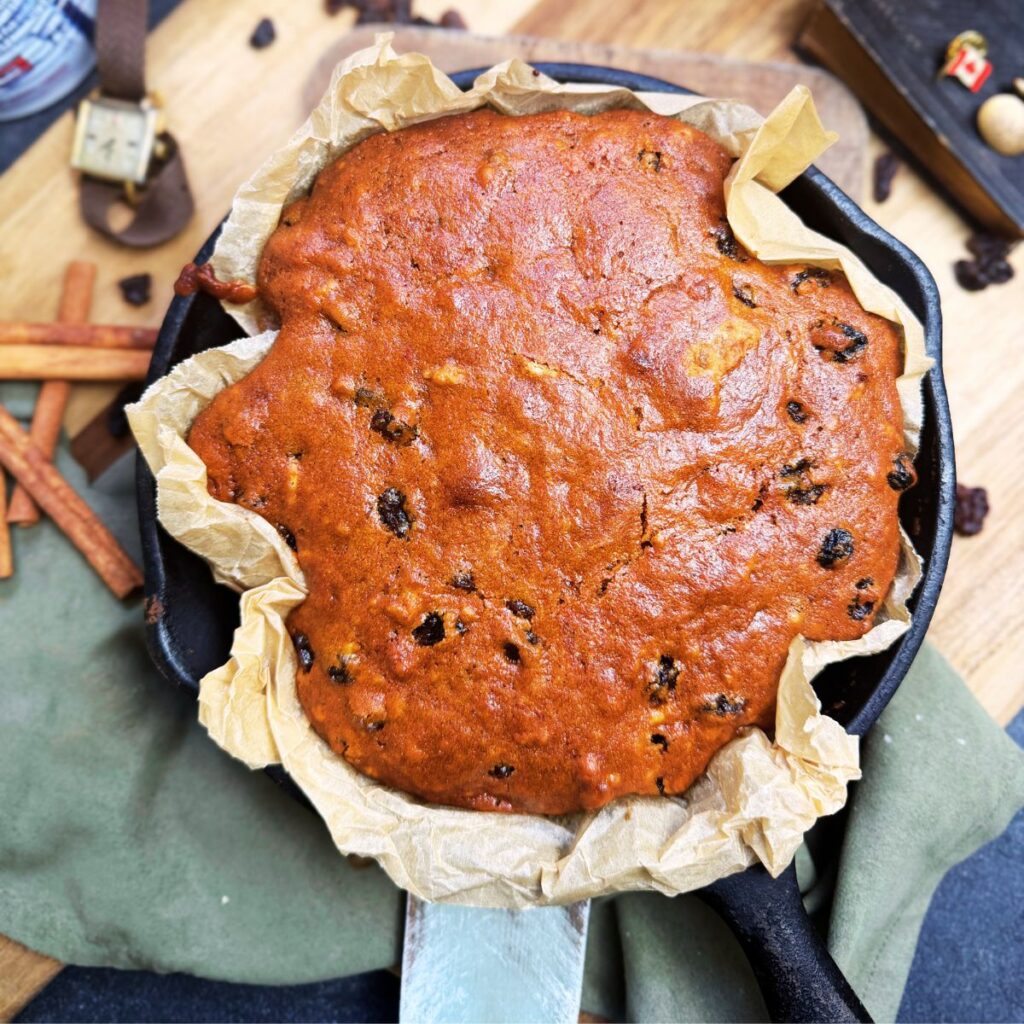
Traditional versions combine raisins, sugar or syrup, water, spices, and a small amount of fat. The mixture is boiled before being cooled and combined with flour and baking soda. The result is a dense, moist, chewy raisin cake with plenty of warm spices.
A documented Canadian version appeared in Allied Cookery in 1916, and similar recipes were published in Canadian conservation cookbooks during the First World War. The cake continued to appear in recipe collections during the Second World War, sometimes under names such as Eggless Spice Cake or Eggless, Butterless, Milkless Cake.
It was also a practical cake to send overseas because the dense loaf had a relatively long keeping quality compared with other baked goods.
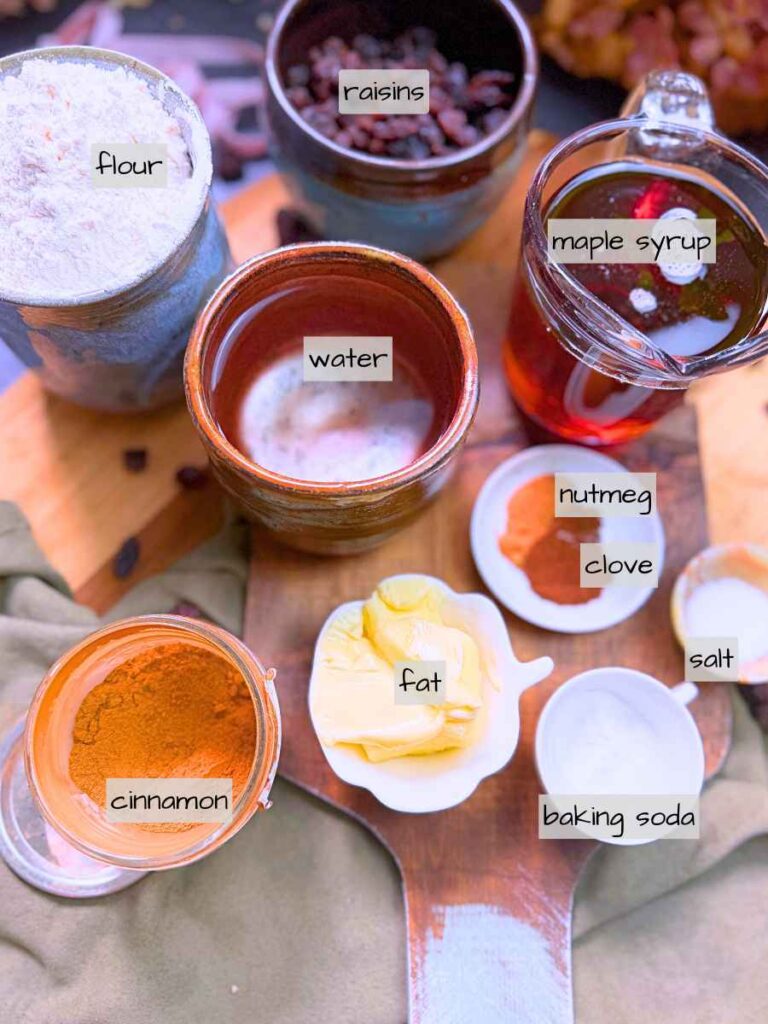
Ingredients
Maple syrup – Often tapped from trees at home, this was an easy, free sugar substitute.
Raisins – Boiled to soften and release their flavour.
Flour – I used all-purpose flour
Spices – I used a mixture of cinnamon, nutmeg, and ground clove.
Salt – Flavour.
Fat – You can use what ever you have on hand but historically lard or shortening would have been common.
Baking soda – To lift and rise the cake batter.
How to Make Canadian War Cake
- Preheat oven to 350 °F (180 °C).
- Grease a line with parchment paper, a medium oven proof pan.
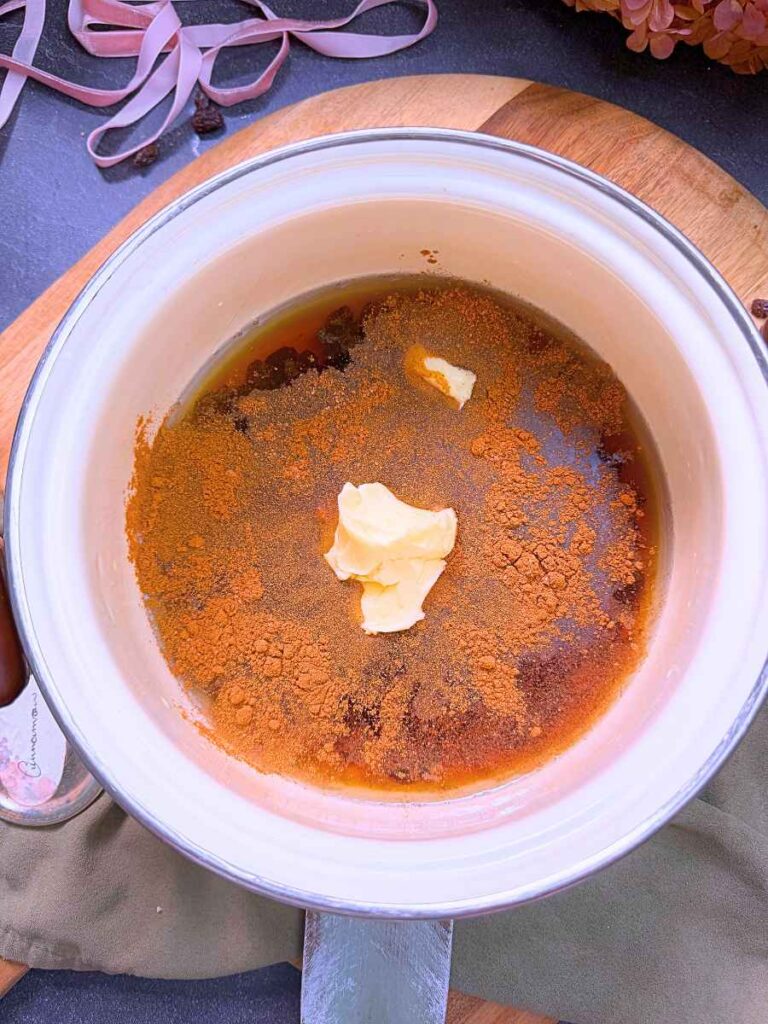
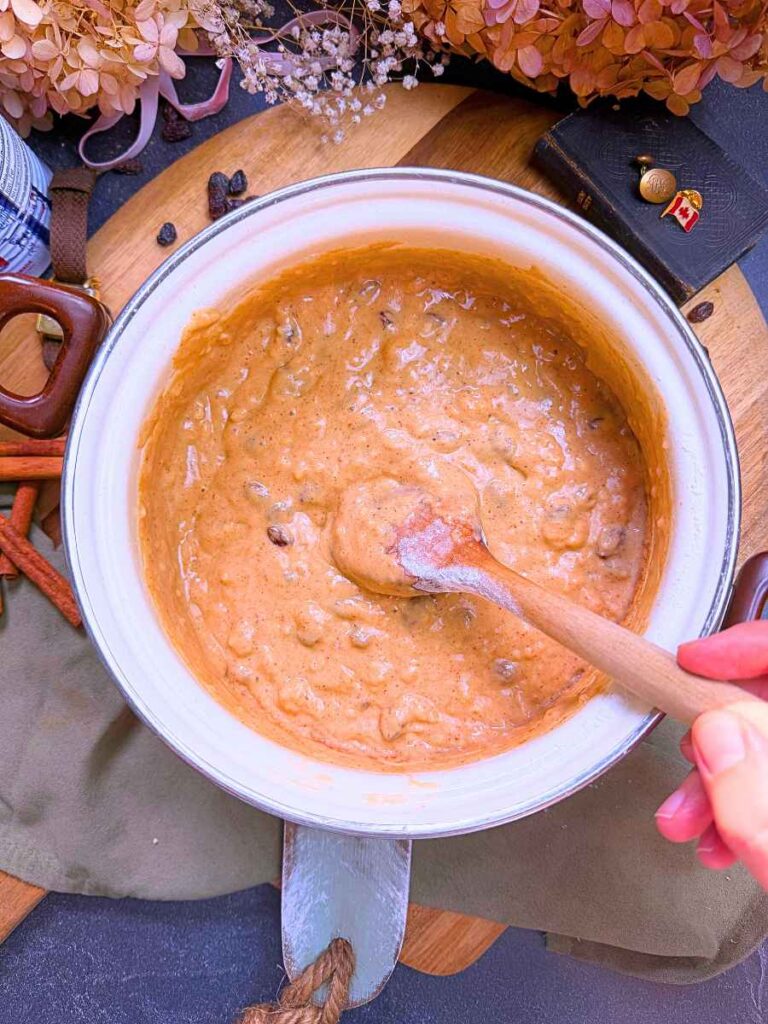
- In a sauce pot mix together 1 cup of water with 1 cup of maple syrup.
- Stir in 1 cup of raisins, 1 teaspoon cinnamon, 1/2 teaspoon nutmeg, 1/4 teaspoon clove, 1/2 teaspoon salt.
- Bring this to a boil on medium heat. Allow to cook 5 minutes, stirring occasionally.
- Remove from the heat and allow to cool until room temperature or slightly warm.
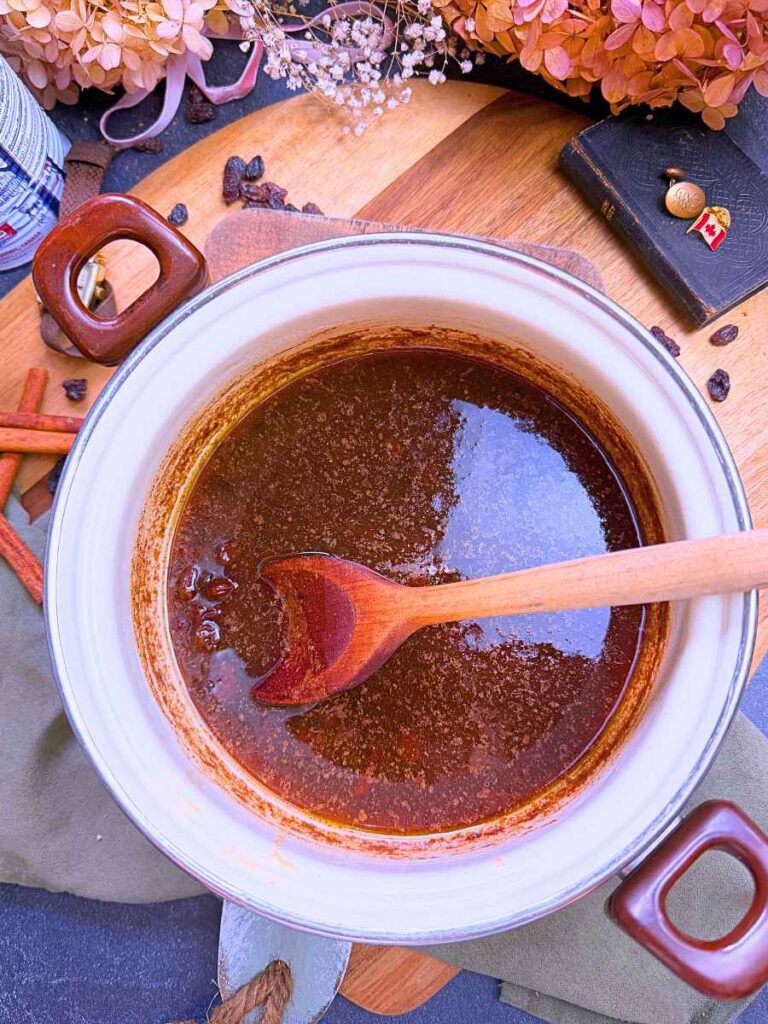
7. Sprinkle evenly on top 1 teaspoon baking soda and 2 cups all-purpose flour.
8. Blend together until you have a soft batter.
9. Spread into prepared pan.
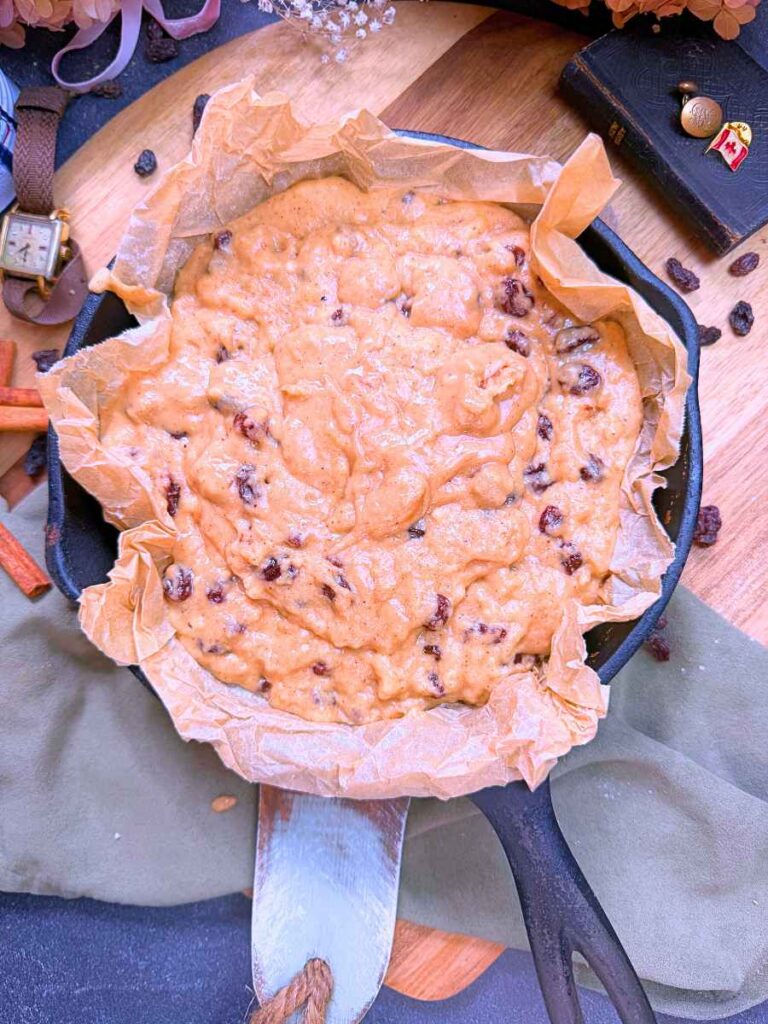
10. Bake for 45 – 50 minutes or until a toothpick inserted into the centre comes out clean.
11. Cool completely before serving.
Canadian War Cake During the Great Depression
Versions of War Cake were made and enjoyed during the Great Depression, although the recipe itself started much earlier.
The cake is documented back to at least the First World War, and some similar recipes appear even earlier. During the Great Depression of the 1930s, however, recipes like this became very common because they could be made economically without many expensive ingredients.
A 1933 British Columbia cookbook, included a version of Canadian War Cake. That makes this recipe a great example of how home cooks adapted their baking to whatever ingredients were available.
Why Was War Cake So Practical?
During wartime, premium ingredients could be rationed, too expensive, or unavailable. Home bakers needed to conserve food and stretch their supplies. Recipes were consequently developed or adapted around inexpensive pantry staples.
War Cake cleverly works around many of those ingredients.
This recipe doesn’t require:
- Eggs
- Milk
- Butter
- Expensive frosting
- Special equipment
Instead, raisins provide sweetness and texture while cinnamon and cloves give the cake its wonderfully old-fashioned flavour.
Substitutions: Make War Cake With What You Have
One of the best things about an old-fashioned recipe like this is its flexibility.
These cakes originated from making do, so don’t feel as though you need to run to the grocery store for one missing ingredient.
Can I Replace Maple Syrup With Sugar?
Absolutely.
If you don’t have maple syrup, replace the 1 cup maple syrup with:
Granulated sugar
Use 1 cup granulated sugar and increase the water from 1 to 1 1/2 cups.
Brown sugar
Brown sugar was commonly used in Canadian War Cake recipes. Use 1 cup packed brown sugar and increase the water to 1 1/2 cups.
Molasses
For a deeper, darker flavour, use:
- ½ cup molasses and ½ cup brown sugar
Molasses gives the cake a rich, almost gingerbread flavour.
Other Ingredient Substitutions
Raisins
Traditional War Cake is made with raisins, but you can experiment with:
- Sultana raisins
- Golden raisins
- Chopped dates
- Dried cranberries
- Dried currants
Lard
Traditional recipes often used lard or shortening.
You can substitute:
- Vegetable shortening
- Coconut oil
- Vegetable oil
- Meat drippings, like bacon fat
- Butter, if you’re not trying to keep the recipe dairy-free
Flour
All-purpose flour works best for this recipe.
You can replace a portion of the flour with whole wheat flour, but I wouldn’t replace all of it. The cake is already quite dense, and too much whole wheat flour can make it heavy.
Why Do You Boil the Raisins?
This is one of the characteristics that makes this recipe different from an ordinary raisin cake.
The raisins are boiled with the syrup, water, spices, and fat before the flour is added.
This does several things:
- Softens the raisins
- Infuses the liquid with raisin flavour
- Helps distribute the spices
- Creates the cake’s characteristic moist, chewy texture
What Does Canadian War Cake Taste Like?
Don’t expect a light, fluffy layer cake.
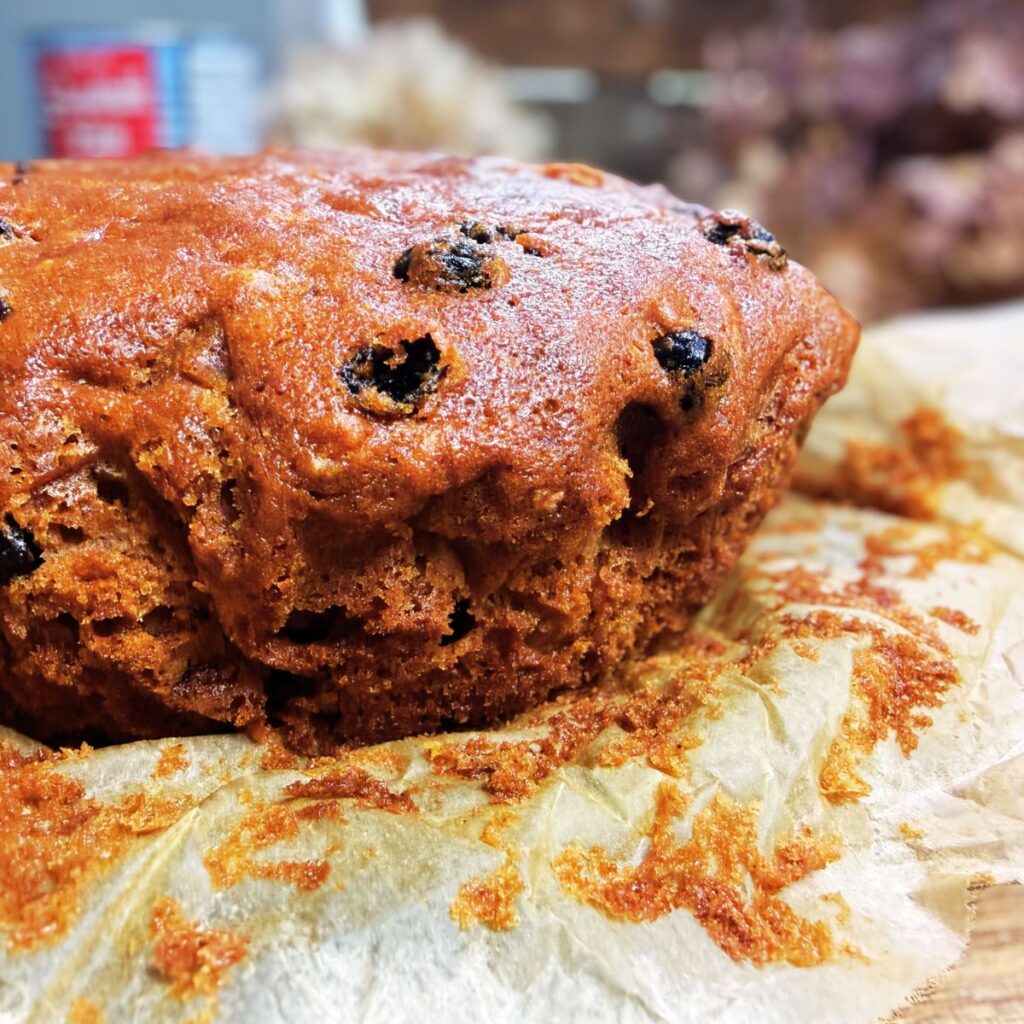
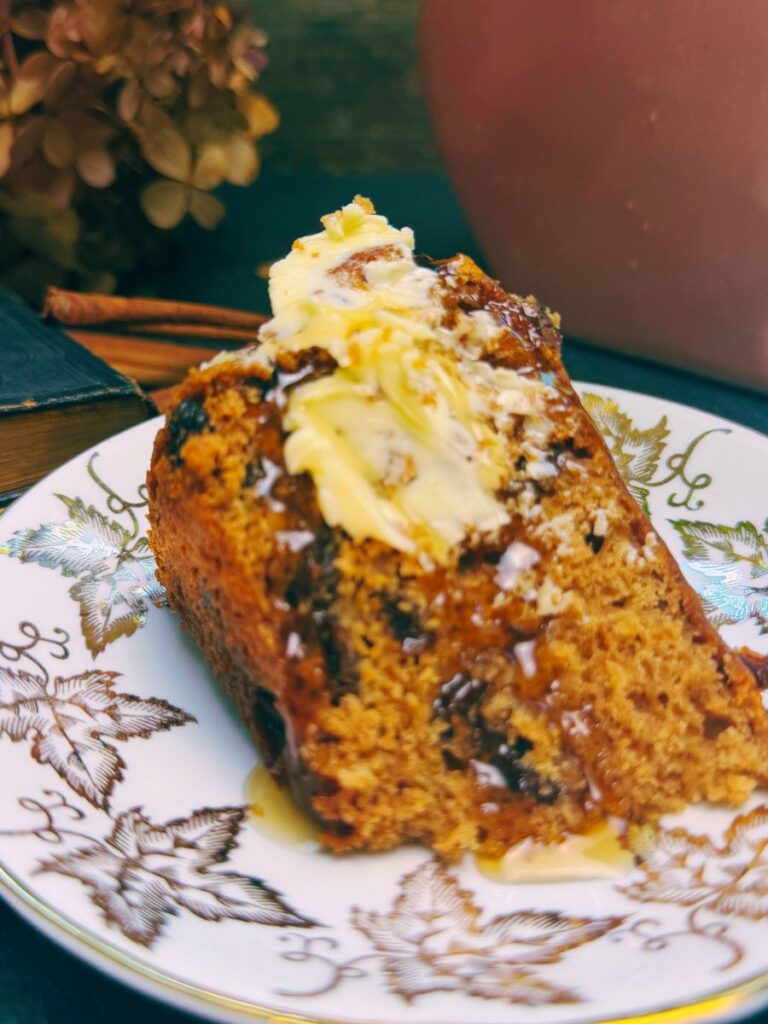
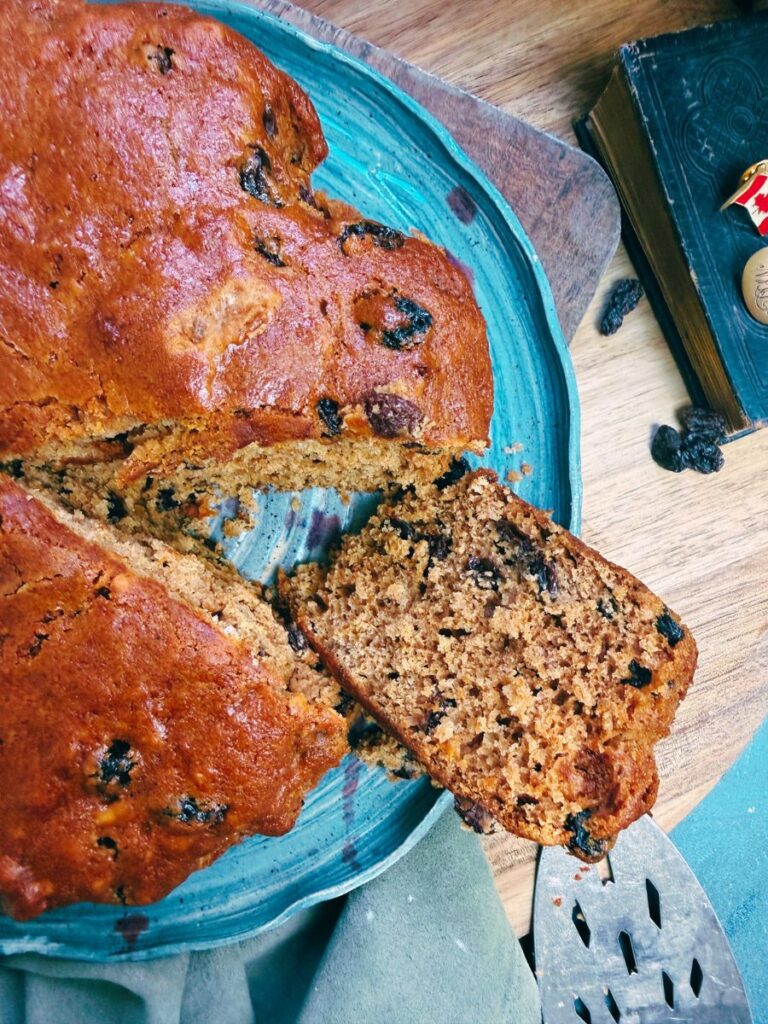
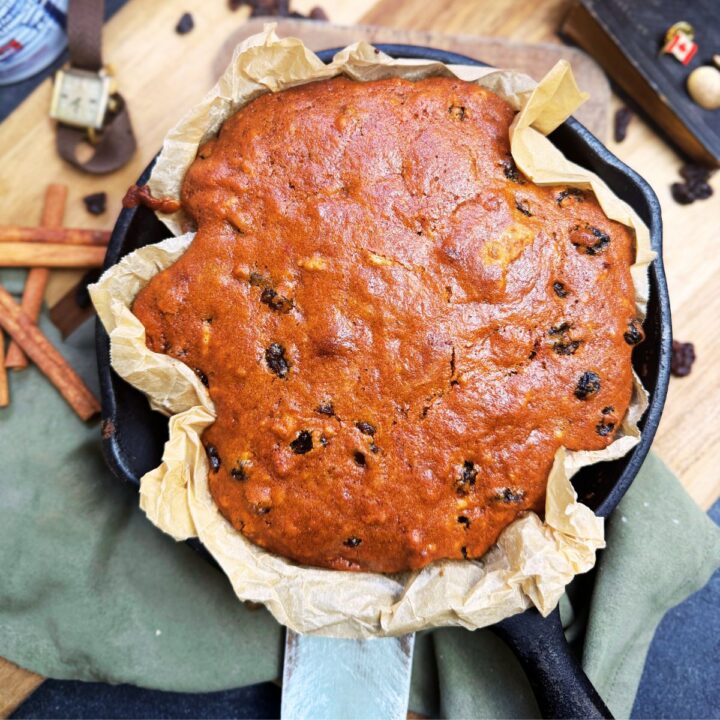
This is a dense, moist, chewy raisin cake with a warm spiced flavour.
The raisins become soft and jammy during baking, while cinnamon, nutmeg, and cloves give it that unmistakable old-fashioned taste.
How to Store War Cake
Allow the cake to cool completely before storing.
Wrap it completely in plastic wrap, or place it in an airtight container.
At room temperature
Store in a cool, dry place for several days.
Because this is a dense cake made without a perishable frosting, it keeps better than many cakes. Historical recipes even mention its usefulness as a cake that could be sent overseas.
In the refrigerator
For longer storage, refrigerate the tightly wrapped cake.
Bring it to room temperature before serving for the best flavour and texture.
In the freezer
Wrap individual slices or the whole cooled loaf completely or store in a freezer bag. Freeze for up to 3 months.
Thaw overnight in the refrigerator or at room temperature.
Tips for Making the Best Old-Fashioned War Cake
Let the boiled mixture cool completely.
Adding flour while the mixture is very hot can affect the final texture.
Don’t worry about a thick batter.
This isn’t supposed to look like a fluffy cupcake batter.
Don’t skip the five-minute boil.
The boiling step is an important part of the traditional method and helps soften the raisins.
Let the cake cool before slicing.
The cake will crumble and hold too much moisture inside if cut immediately.
Try it the next day.
Like many old-fashioned fruit and spice cakes, the flavours have time to deepen after resting.
Frequently Asked Questions
Why is it called War Cake?
It’s called War Cake because recipes like this style became essential for food conservation during the First and Second World Wars. The cake avoided ingredients such as eggs, milk, and butter that were rationed.
Can I use brown sugar instead of maple syrup?
Yes. Brown sugar is actually one of the most traditional choices for Canadian War Cake.
Can I use molasses instead of maple syrup?
Yes. For a rich molasses flavour, use ½ cup molasses plus ½ cup brown sugar.
Why is my War Cake so dense?
War Cake is naturally denser and chewier than a modern butter cake. However, using too much flour or overbaking can make it unnecessarily heavy or dry.
Canadian War Cake
An old-fashioned raisin cake made by clever home cooks during times when ingredients such as eggs, butter, and milk were expensive or being rationed.
Ingredients
- 1 cup water 250 ml
- 1 cup maple syrup 250 ml
- 1 cup raisins 150 g
- 2 Tablespoons fat (lard, shortening, meat drippings, butter, coconut oil, will all work well) 30 g
- 1 teaspoon cinnamon 3 g
- 1/2 teaspoon nutmeg 2 g
- 1/4 teaspoon ground clove 1 g
- 1/2 teaspoon salt 2 g
- 1 teaspoon baking soda 5 g
- 2 cups all-purpose flour 300 g
Instructions
- Preheat oven to 350 °F (180 °C).
- Grease a line with parchment paper, a medium oven proof pan.
- In a sauce pot mix together 1 cup of water with 1 cup of maple syrup.
- Stir in 1 cup of raisins, and 2 Tablespoons fat.
- Bring this to a boil on medium heat. Allow to cook 5 minutes, stirring occasionally.
- Remove from the heat and allow to cool until room temperature or slightly warm.
- Stir in 1 teaspoon cinnamon, 1/2 teaspoon nutmeg, 1/4 teaspoon ground clove, 1/2 teaspoon salt.
- Sprinkle evenly on top 1 teaspoon baking soda and 2 cups all-purpose flour.
- Blend together until you have a soft batter.
- Spread into prepared pan.
- Bake for 45 - 50 minutes or until a toothpick inserted into the centre comes out clean.
- Cool completely before serving.
Notes
You can replace the maple syrup in this recipe with white sugar, brown sugar, molasses or a mixture of all three. This cake is about using what you have on hand.
Nutrition Information
Yield
10Serving Size
1Amount Per Serving Calories 325Total Fat 1gSaturated Fat 0gUnsaturated Fat 1gSodium 274mgCarbohydrates 76gFiber 3gSugar 30gProtein 6g
Nutrition information isn't always accurate.
More Old-Fashioned Recipes to Try
If you enjoy recipes like this Canadian War Cake, you might also enjoy: